Searching for a top lift company often begins with product catalogues, cabin designs, capacity options, and quotations. Yet modern buildings require more than an attractive elevator. Developers increasingly need lift systems that fit architectural constraints, passenger expectations, safety requirements, operational schedules, and long-term maintenance plans.
Understanding what a capable lift provider should contribute can make supplier evaluation more meaningful.
Technical Planning Should Begin Early
Elevator planning is easier when it starts during the building design stage.
Architects and developers can coordinate shaft dimensions, pit requirements, headroom, electrical provisions, landing arrangements, machine requirements, and passenger circulation before construction reaches an advanced stage.
Early coordination can reduce later modifications.
For an existing Delhi building, the process may begin differently. A technical survey can identify available space and determine which configurations may be practical within structural limitations.
Lift Selection Should Reflect Usage
A premium-looking cabin does not compensate for an unsuitable lift specification.
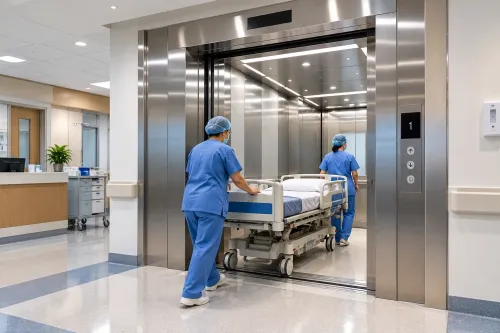
The provider should understand who will use the elevator and how frequently it will operate. Residential properties, offices, hotels, hospitals, retail buildings, and industrial premises can have very different operational demands.
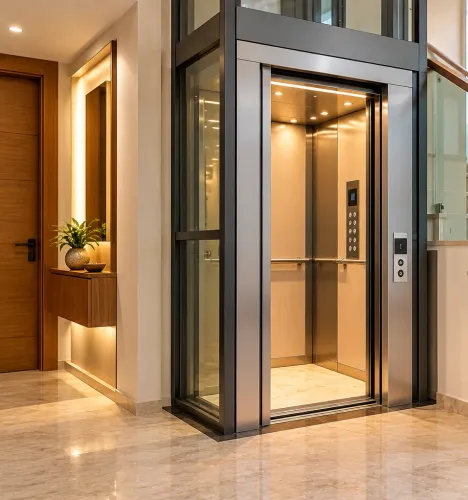
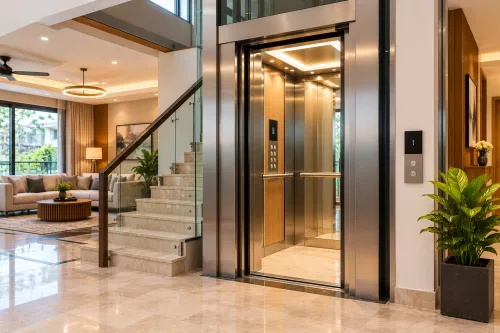
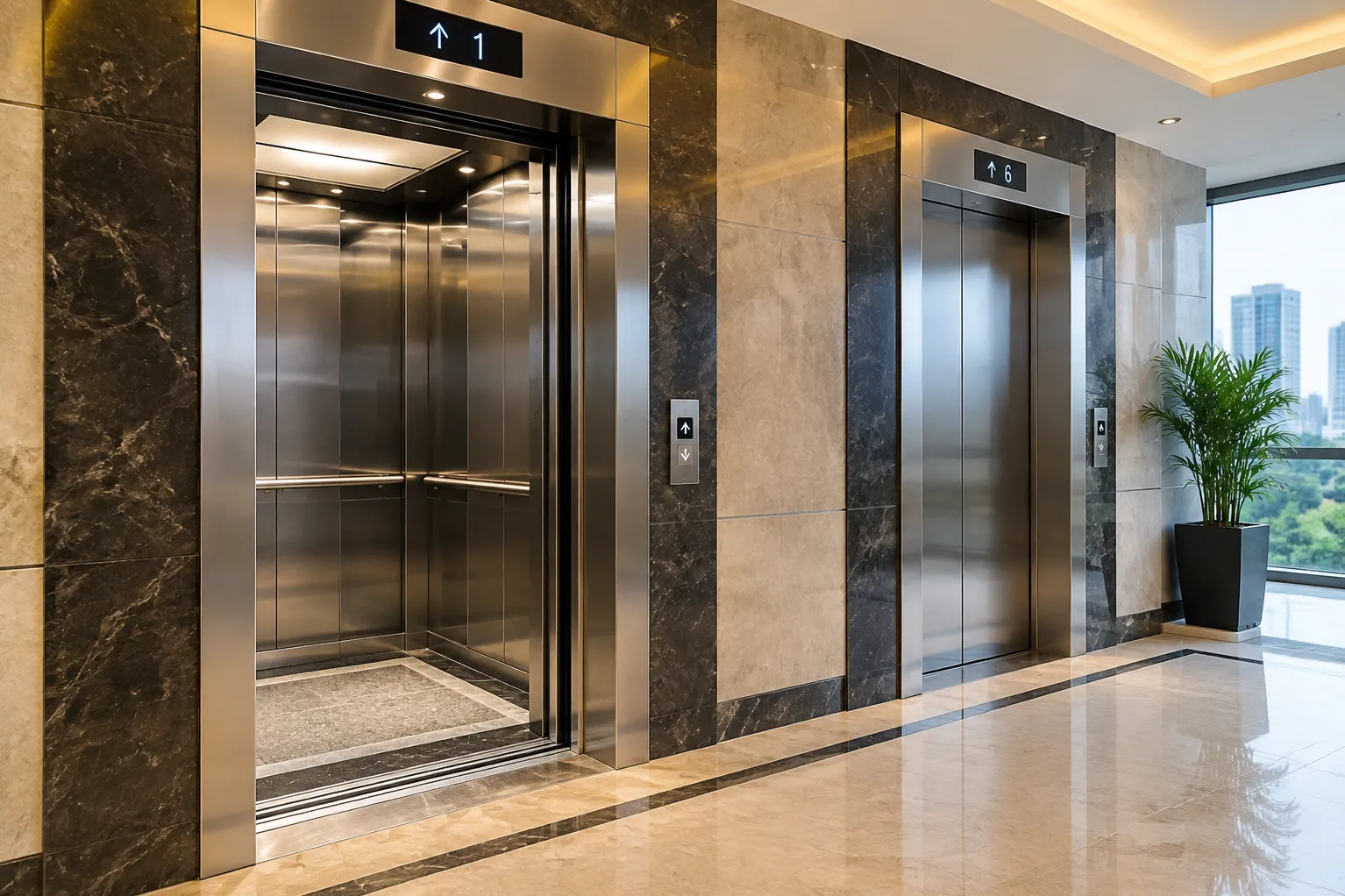
Capacity, speed, door type, cabin dimensions, finishes, controls, and accessibility features should therefore be selected according to the project.
Component Quality Deserves Attention
Users mainly see the cabin and landing doors, but much of the elevator’s performance depends on components they rarely notice.
Controllers, drive systems, door operators, safety devices, fixtures, electrical components, guide systems, and other equipment contribute to overall operation.
Ask what components are proposed and why they suit the expected workload.
Installation Quality Matters
Even suitable equipment can perform poorly when installation quality is inconsistent.
Professional execution requires accurate alignment, careful component installation, electrical work, testing, adjustment, safety verification, and commissioning.
Builders should therefore evaluate installation capability as seriously as product specifications.
Documentation Creates Clarity
A professionally managed project should have clear specifications and defined responsibilities.
Before work begins, stakeholders should understand:
- Proposed elevator type
- Capacity
- Speed
- Cabin dimensions
- Door configuration
- Civil requirements
- Electrical requirements
- Included features
- Installation scope
- Testing process
- Maintenance arrangements
This reduces misunderstandings during execution.
After-Sales Support Is Part of the Product
The relationship with a lift company does not finish at commissioning.
Routine maintenance becomes essential once residents, employees, customers, patients, or visitors depend on the elevator every day. Preventive inspections can help identify wear, adjustment needs, and developing technical issues before they cause larger disruptions.
For buildings in Delhi and nearby NCR markets, access to responsive service personnel can therefore be an important evaluation point.
Firefox Elevators Private Limited provides elevator-related solutions covering manufacturing, components, installation, maintenance, and repair requirements.
Ultimately, the qualities associated with a top lift company are visible throughout the project lifecycle: appropriate technical advice, transparent specifications, disciplined installation, suitable safety provisions, testing, documentation, and dependable maintenance support.
Property owners who assess these areas are better positioned to choose a lift system based on long-term building needs rather than appearance or purchase price alone.
Keywords