A viable dumbwaiter route depends on more than having two floors to connect. You need to test the building structure, landing access, fire separation, load pattern, hygiene requirements, and maintenance route before ordering equipment. By the end, you will be able to map a workable installation and identify when a service lift, goods lift, conveyor, or ordinary manual route is the better choice.
Key takeaways
- Use dumbwaiters for recurring goods movement between named floors.
- Test the full route before reserving a shaft or cabinet.
- Specify load limits, landing doors, controls, and maintenance duties in writing.
- Exclude people, wheelchairs, pallets, and unrestricted trolley traffic.
Match the Dumbwaiter to a Real Vertical Workflow
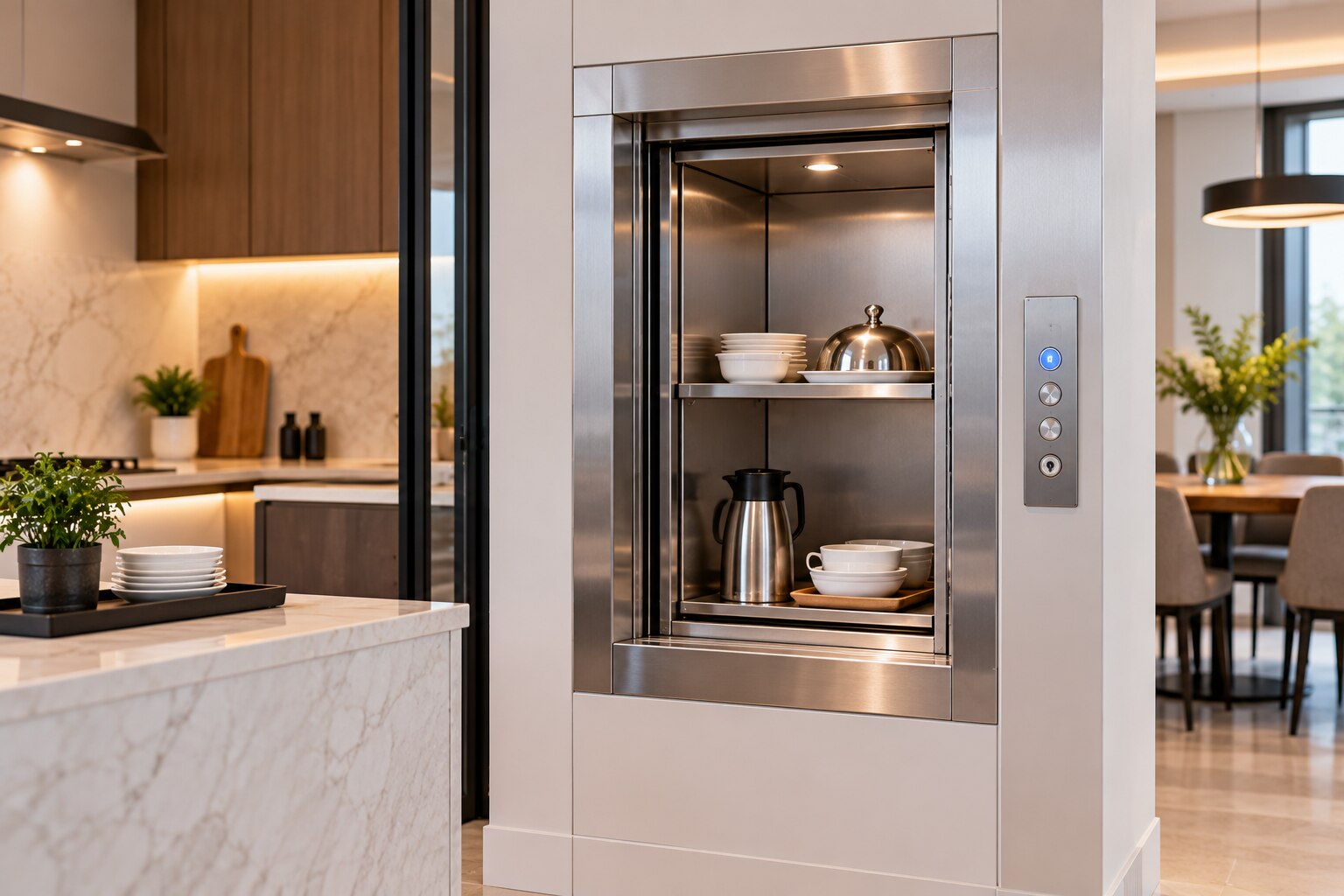
A dumbwaiter is for goods only: not people, wheelchair access, pallets, heavy machinery, or unrestricted trolley traffic. Good dumbwaiter installation locations connect two or more named floors where the same items move repeatedly, such as meals from kitchen to dining room or pantry supplies from pantry to bedrooms.
| Type | Intended use | Do not confuse it with |
|---|---|---|
| Food dumbwaiter | Trays, dishes, and meal containers between kitchen and dining areas | A passenger lift or accessible route |
| General goods dumbwaiter | Documents, books, linen, laboratory supplies, and storage-room items | A pallet or heavy-load lift |
| Hospital service lift | Controlled movement of clean supplies, meals, linen, or refuse between hospital departments | A patient or passenger lift |
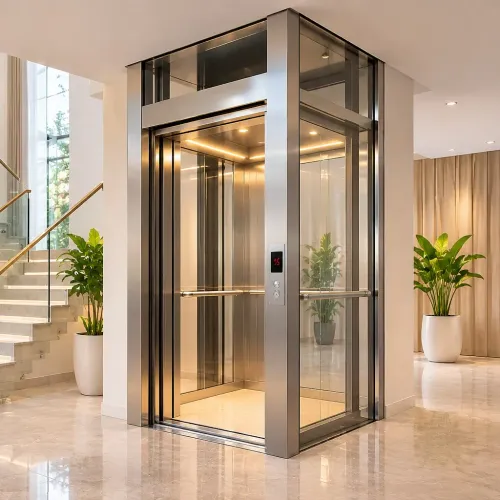
| Passenger-rated lift | People and wheelchair users | Any goods-only dumbwaiter |
In hotels, a hotel service dumbwaiter can link the kitchen, pantry, housekeeping store, linen room, and selected guest-service floors. Offices and libraries can connect records, stationery, and books; laboratories can connect sample or supply rooms; refuse or supply routes can connect collection points to storage or disposal areas.
The best pattern is repeated, predictable movement between selected floors—not a car serving every level, which adds doors, wiring, travel time, and inspection points.
Choose the route only after checking landing access, structural openings, headroom, lower termination, fire separation, and contamination control. Keep clean and dirty traffic separate, use washable surrounds, and contain spills. Verify the Indian code edition, permit, inspection, fire requirements, and authority classification for the site and use case.
Test the Route Before You Reserve a Shaft or Cabinet
A viable route is one you can trace from the loading point to every serving level without cutting through structure, services, or fire compartments. Check it floor by floor:
- Align the serving levels and mark each landing position, approach space, and user access.
- Measure headroom clearance above the top stop and identify the lower termination, including space for a dumbwaiter pit where required.
- Locate joists, beams, walls, and bearing points, then confirm adequate structural support for the equipment and loads.
- Trace a removal path for the motor, controller, car, rails, and other large components after installation.
| Through-floor dumbwaiter | Needs a framed, protected opening at every stop; the cabinet passes through each floor | Suitable when aligned openings can be formed and protected |
|---|---|---|
| Shaft-mounted unit | Needs a continuous hoistway, guide support, landing-door openings, dumbwaiter pit, and overhead clearance | Suitable when a dedicated shaft can be built or retained |
Before ordering, coordinate joists, beams, plumbing, electrical services, ductwork, sprinklers, shaft walls, penetrations, and fire compartments. Confirm the required fire-resistance rating, fire-stopping, smoke control, and opening protection with the project’s code consultant and authority.
A cupboard door cannot replace a landing gate or interlocked landing door. An ordinary latch can leave the hoistway exposed while the car is elsewhere; compliant protection prevents access and stops operation when a landing entrance is unsecured.
Ask for the door and interlock arrangement on the approved route drawing, not as a later architectural detail.
Draw the Installation Around Loads, Landings, and Daily Use
Before construction or renovation begins, the planning drawing must show the complete route and every landing, not just a cabinet outline. Include:
- A floor-by-floor route with dumbwaiter car dimensions, clear landing-door openings, door swings, and the dumbwaiter loading height.
- Shelves or transfer counters, service clearances, maintenance access, ventilation, lighting, drainage, and power supply.
- Structural openings, supports, threshold details, fire-stopping, and the route for removing major components.
Choose dumbwaiter capacity from the heaviest realistic delivery: trays with meal containers, document boxes, linen, refuse bins, racks, carts, and the largest item that must pass through the opening. Add the container or cart weight.
Check concentrated wheel loads, threshold strength, floor loading, and the approach slab; a nominal 500 kg rating does not make a 500 kg cart safe to roll across a weak threshold.
Loading method changes the specification:
| Option | Planning consequence | Required control |
|---|---|---|
| Hand loading | Flexible placement but slower handling | Keep loads stable and within the stated limit |
| Fixed shelves | Predictable tiers and reduced movement | Match shelf spacing to containers |
| Removable trays | Easier cleaning and transfer | Restrain trays against sliding |
| Carts or counters | Faster transfers but higher point loads | Confirm wheel loads, threshold strength, and cart dimensions |
Specify restraints, shelf load limits, and cart limits so an unstable or overweight load cannot enter. Record the dumbwaiter duty cycle: starts per hour, runs per hour, travel distance, speed, loading pattern, and operating hours. These figures size the motor, brake, controller, and thermal capacity; static load alone does not.
Select the Right Equipment for Food, Supplies, and Service Traffic
Choose a dumbwaiter when small, predictable goods move between selected floors and users can load and unload at each landing without entering the car.
| Option | Best fit | Do not use it for |
|---|---|---|
| Dumbwaiter | Meals, documents, medicines, linen, or small supplies | People, pallets, trolleys, bulky or heavy loads |
| Service lift | Staff-operated goods and equipment between service areas | Unrestricted public access or passenger use unless rated for it |
| Passenger elevator | People, wheelchair access, and mixed passenger traffic | Goods-only workflows with spill or impact risks |
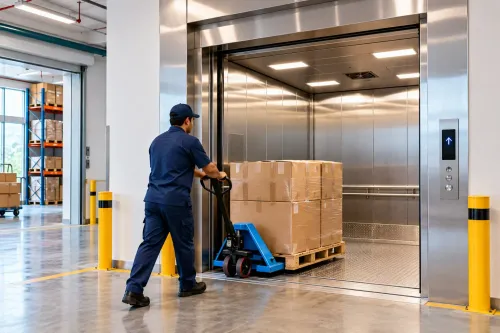
| Dedicated goods lift | Pallets, bins, carts, machinery, or high-capacity deliveries | Small low-volume transfers where its size is wasteful |
| Conveyor | Continuous, high-volume movement along a fixed route | Irregular loads, multiple independent landings, or secure separated traffic |
| Stair transport or trolley route | Occasional light loads where a lift is unjustified | Unsafe manual handling, steep stairs, or heavy deliveries |
Choose another system for hazardous materials, heavy machinery, pallet or trolley movement, bulky loads, high-volume logistics, or routes needing unrestricted access. Goods lift versus dumbwaiter is a capacity and access decision, not a name choice.
For food, laboratory, pharmacy, and refuse routes, design contamination control into the equipment:
- Separate clean and dirty traffic; use dedicated cars or removable containers.
- Specify washable landing surrounds, sealed or protected components, removable shelves, spill containment, and drainage.
- Keep exposed food away from shaft entry points, and write a cleaning procedure covering the car, shelves, thresholds, and landing.
- Confirm dumbwaiter hygiene and dumbwaiter fire separation with the designer.
Set stops by workflow, not floor count. Every added landing adds doors, wiring, inspection points, cost, and travel time. Verify Indian code classification, permits, fire-separation details, inspection, and authority requirements for the site instead of accepting a generic “code-compliant” claim.
Specify Installation, Maintenance, and Responsibility Before Purchase
A usable dumbwaiter is specified by its service plan, not only by car size and price. Before purchase, make dumbwaiter installation planning and dumbwaiter safety requirements India part of the written scope.
1. Require coordinated drawings showing the machine or controller position, safe inspection access, brake and controller service space, component-removal route, landing protection, fire-stopping details, electrical supply, ventilation, drainage, lighting, and cleanable finishes where food or waste is carried.
2. Ask the supplier to identify the exact BIS standard and edition, required permits, inspection authority, acceptance tests, and handover documents. Obtain signed inspection records, test results, wiring diagrams, load data, and operating instructions.
3. Put the dumbwaiter maintenance contract in writing. Specify preventive-maintenance intervals, response times, entrapment and failed-door procedures, spare-parts availability, warranty limits, and who may reset a tripped safety device. Resetting must follow a documented fault investigation, not a quick restart.
4. Reject a controller hidden above a finished ceiling unless safe access, working clearance, lighting, and component removal are designed and approved. Reject proprietary door hardware or controls without a documented replacement plan, stock commitment, and compatibility record.
Firefox Elevators Private Limited, or any manufacturer, component supplier, installer, or maintenance provider, should reconcile the route drawing, load schedule, duty cycle, safety documents, and long-term service plan before quoting. A proper dumbwaiter inspection regime keeps the system serviceable after handover.
Related product
 | Elevators Dumbwaiter ₹500000 The Dumbwaiter Elevator is a compact and efficient solution for transporting small items like food, documents, and supplies between floors. |
Frequently asked questions
Where can a dumbwaiter be installed?
Install one between named floors with a repeated goods workflow, such as a kitchen and dining room or pantry and bedrooms.
What should you test before reserving a dumbwaiter shaft or cabinet?
Test the complete route, including shaft or cabinet location, landings, door clearance, loading space, and daily movement of goods.
What should the installation design account for?
Plan around the goods’ size and weight, landing positions, door operation, controls, clearances, and the people who load and unload each level.
What should you specify before buying a dumbwaiter?
Specify the intended goods, rated load, travel and landings, equipment type, installation work, maintenance schedule, safety responsibilities, and service contact.