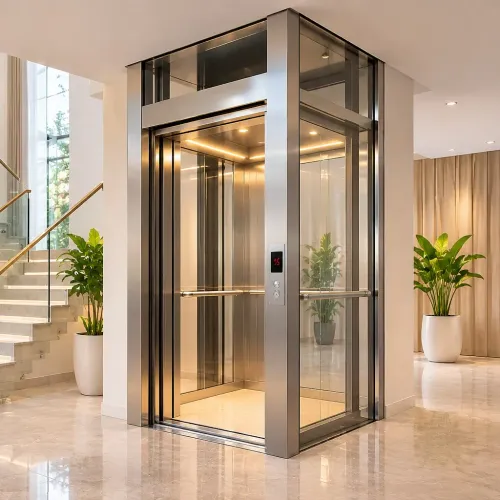
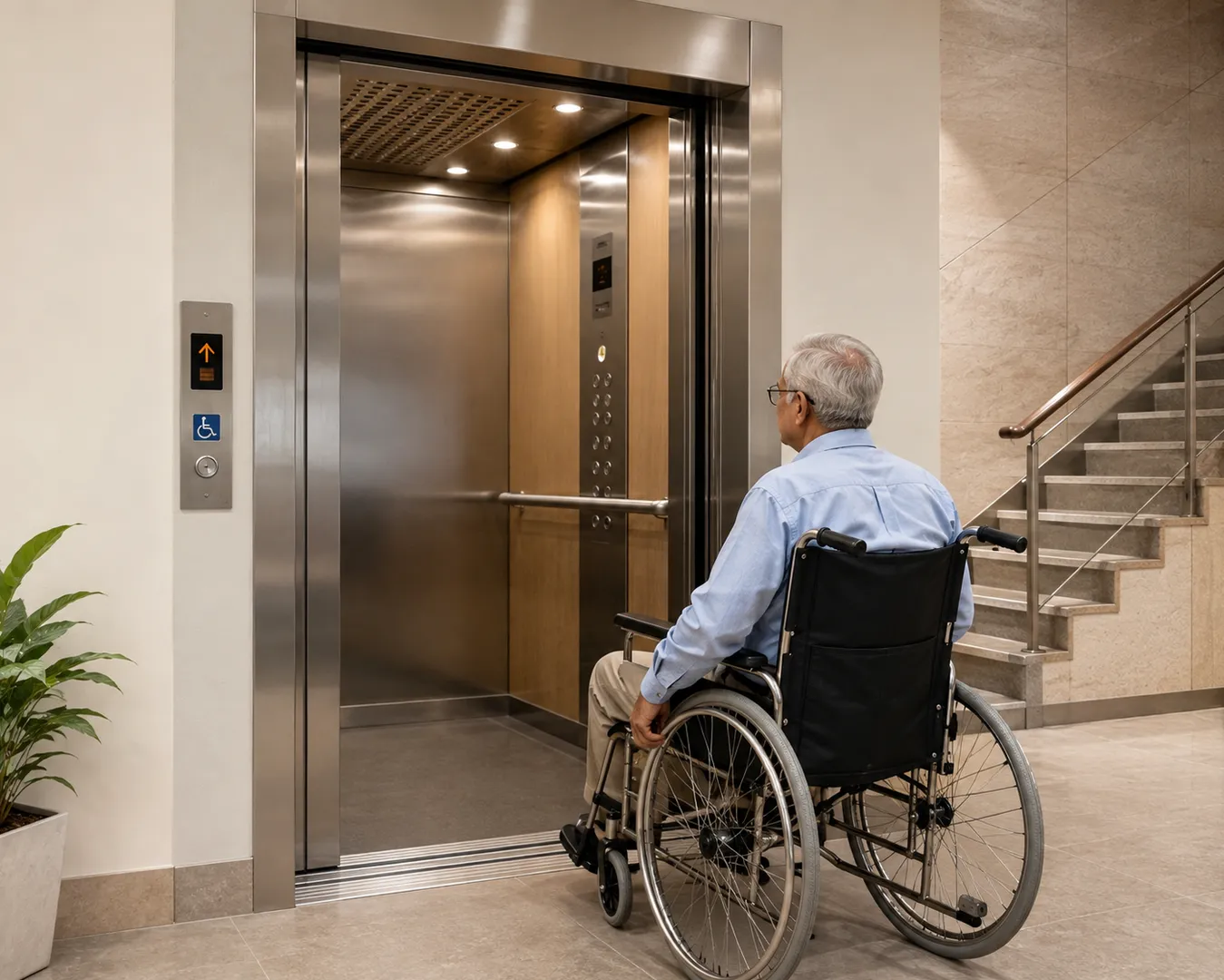
Accessibility is one of the most important reasons for installing a lift. For elderly people and wheelchair users, stairs can restrict independent movement between floors and make otherwise comfortable buildings difficult to navigate.
Firefox Elevators Private Limited manufactures lift solutions for different accessibility requirements in Delhi, including residential and institutional applications where comfortable vertical movement is essential.
What Should an Accessibility Lift Provide?
An accessible lift should make entering, travelling, and exiting straightforward.
Important considerations include:
- Adequate cabin dimensions
- Suitable door width
- Convenient control-panel positioning
- Smooth acceleration and stopping
- Clear floor indication
- Reliable door operation
- Emergency communication
- Appropriate landing access
Wheelchair turning and manoeuvring requirements should also be considered when planning surrounding spaces.
Why Cabin Size Matters
A lift may technically accommodate a passenger while still being difficult for a wheelchair user to use comfortably.
Cabin dimensions should therefore be evaluated together with entrance width and landing space.
Where a caregiver may accompany the passenger, additional usable cabin space may be required.
Accessibility for Elderly Users
Senior citizens may have different requirements from wheelchair users.
They may experience difficulty maintaining balance, seeing small controls, standing for extended periods, or reacting quickly to doors.
Features such as comfortable handrails, clearly visible controls, adequate lighting, smooth movement, and appropriately timed doors can make everyday use easier.
Delhi Buildings Have Different Accessibility Challenges
Older properties may have limited shaft space or structural restrictions, while newly constructed buildings provide more opportunities to integrate accessibility into the original design.
Hospitals, clinics, residences, care facilities, offices, and public-use buildings can also have very different passenger movement patterns.
This makes site evaluation particularly important.
Accessibility Should Be Planned, Not Added Later
Where possible, elevator accessibility should be considered during initial building design. Door openings, landing areas, shaft dimensions, electrical requirements, and passenger circulation can then be coordinated properly.
For existing buildings, careful assessment can identify practical installation possibilities without making unrealistic assumptions about available space.
The best accessibility lift is ultimately one that matches the user's mobility needs and the building's physical conditions. Thoughtful planning can make vertical movement safer, easier, and more dignified for elderly passengers and wheelchair users throughout Delhi.
Keywords