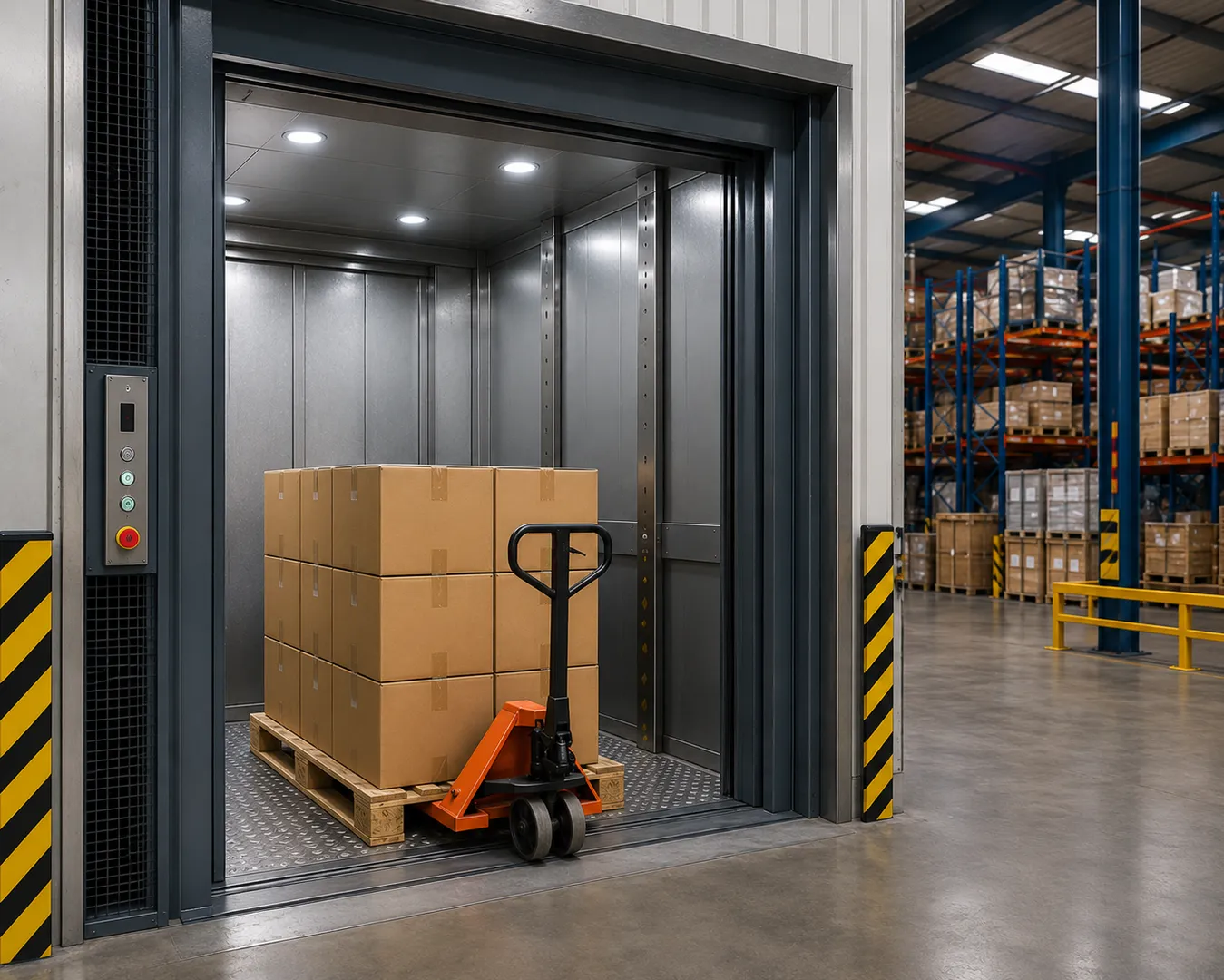
Selecting an industrial goods lift based only on the heaviest item currently being moved can create problems later. Goods lifts must handle real operating conditions, including load dimensions, movement frequency, loading equipment, and future production requirements.
Firefox Elevators Private Limited manufactures lift solutions for industrial and commercial applications in Delhi and surrounding industrial areas, where warehouses, manufacturing units, workshops, and storage facilities frequently require dependable material movement.
Start With the Actual Load
Identify what the lift will transport.
It may include:
- Raw materials
- Finished products
- Machinery components
- Trolleys
- Pallets
- Packaged inventory
- Tools and equipment
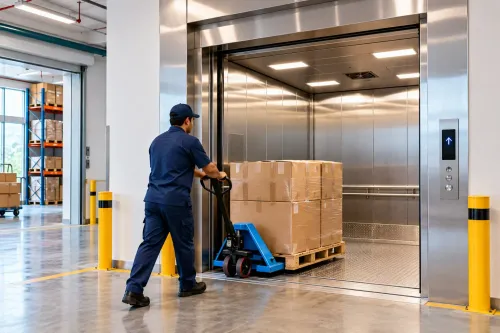
The total operating load may include both the goods and any permitted handling equipment used with them.
Capacity Is Not the Only Specification
Suppose two factories both require a similar rated load. One moves compact metal components, while another transports bulky cartons.
Their cabin requirements may be completely different.
Consider cabin:
- Width
- Depth
- Height
- Door opening
- Loading direction
- Floor strength
A goods lift must accommodate the physical dimensions of the load, not merely its weight.
Think About Frequency
A lift used a few times per day has a different duty pattern from one operating continuously during production hours.
Frequent material movement can influence the selection of drive system, door arrangement, controls, and other components.
Underestimating usage may lead to an elevator that does not adequately match operational requirements.
Avoid Oversizing Without Reason
Choosing significantly more capacity than necessary is not automatically safer or better.
An oversized goods lift may require additional shaft space, structural provisions, and investment. The objective should be to establish sufficient capacity with a reasonable operating margin based on actual requirements.
Consider Future Expansion
Industrial requirements change.
A Delhi manufacturing facility may introduce new machinery, increase production, or begin handling larger materials in the future. Discussing foreseeable expansion during the planning stage can reduce the likelihood of selecting a lift that becomes inadequate too quickly.
A proper goods lift assessment should therefore examine capacity, dimensions, loading methods, frequency, travel height, and operating environment together.
Manufacturers such as Firefox Elevators Private Limited can use these site-specific details to determine an appropriate configuration rather than relying on a generic capacity recommendation.
Keywords