Geared and gearless elevators both use traction principles, but they differ in how motor power is transmitted to the traction sheave. These differences can affect efficiency, ride characteristics, maintenance requirements, equipment configuration, and suitability for particular buildings.
For developers and property owners in Delhi, understanding these distinctions can prevent elevator specifications from being based solely on price.
Firefox Elevators Private Limited manufactures elevator solutions for different residential, commercial, and institutional requirements.
What Is a Geared Elevator?
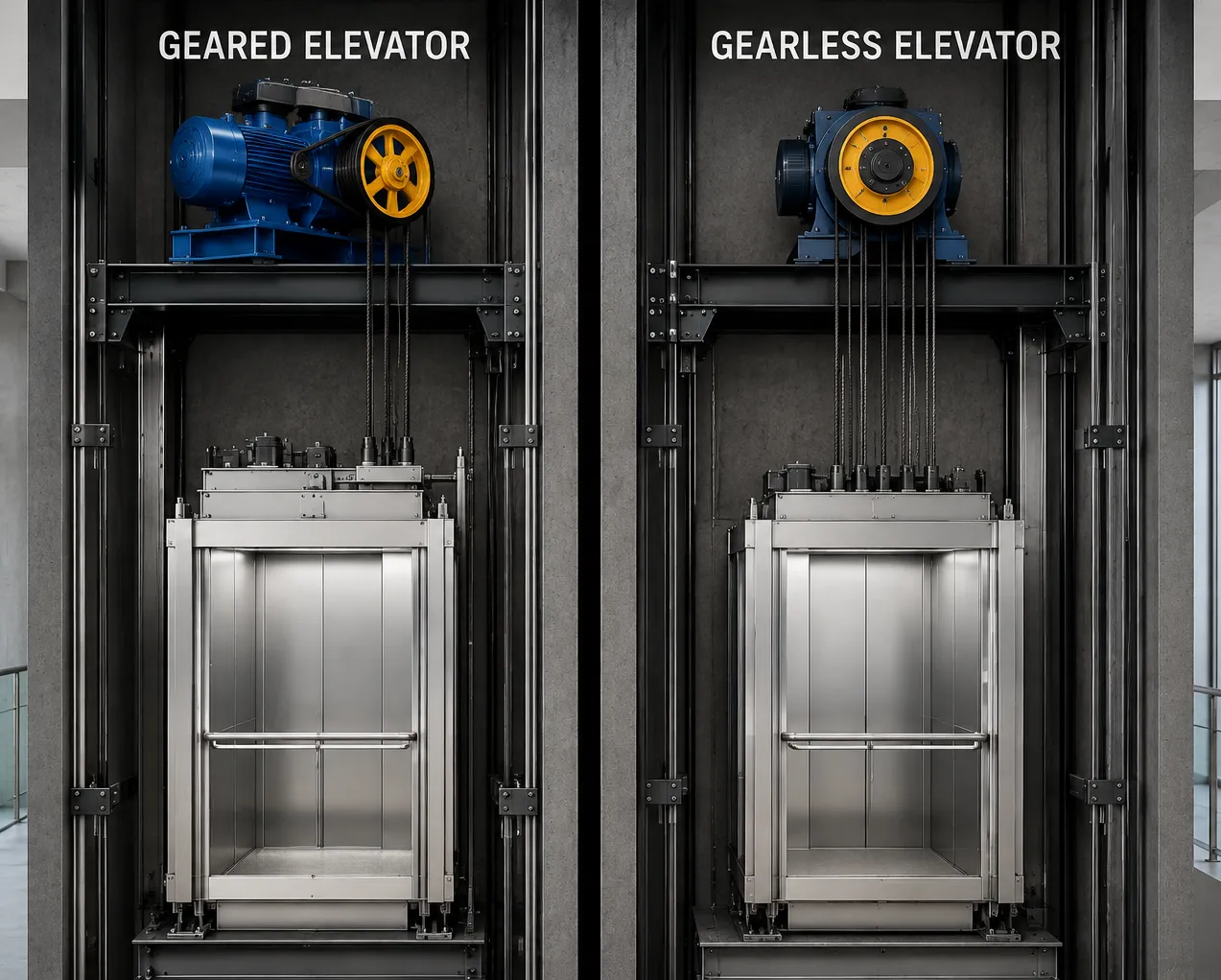
In a geared traction elevator, the motor works through a gearbox that drives the traction sheave.
Geared systems have historically been used across many building applications and can remain suitable where their performance characteristics match the project's requirements.
What Is a Gearless Elevator?
In a gearless system, the drive motor operates the traction sheave without a conventional gearbox between them.
Modern gearless technology is commonly considered for projects requiring efficient operation and refined ride performance.
Key Differences to Evaluate
Maintenance
Gearboxes introduce mechanical components that require appropriate inspection and maintenance. Gearless systems remove the conventional gearbox, although the complete elevator still requires scheduled servicing.
Efficiency
Gearless drive technology can provide efficiency advantages in suitable applications, but actual energy consumption depends on elevator capacity, traffic, travel, control systems, and usage patterns.
Ride Performance
Modern gearless systems can offer smooth acceleration and controlled movement, which can be valuable in premium passenger applications.
Building Application
The correct technology depends on factors such as number of floors, travel height, passenger traffic, rated capacity, and expected operating frequency.
Don't Select an Elevator by Drive Type Alone
Buyers sometimes focus heavily on terms such as 'gearless' because they sound more advanced.
Drive technology is only one component of the complete elevator.
Door systems, controllers, cabin design, safety devices, installation quality, shaft conditions, maintenance accessibility, and component selection all influence long-term performance.
Making the Right Choice in Delhi
A residential development, corporate office, hospital, hotel, and commercial complex will each have different traffic patterns.
Before selecting geared or gearless technology, obtain a detailed assessment of building height, passenger demand, available infrastructure, expected ride quality, and long-term maintenance priorities.
For Delhi projects, Firefox Elevators Private Limited can evaluate these parameters and manufacture an elevator configuration based on actual application requirements rather than a one-size-fits-all specification.
Keywords